
On April 11, 2024, tragedy struck when Sudan’s largest refugee camps—Zamzam and Abu Shouk, which together housed over 800,000 IDPs near El Fasher (the capital of North Darfur)—were attacked. The assault claimed the lives of hundreds, including women, children, and humanitarian staff, and forced hundreds of thousands of people, already vulnerable from the ongoing war that began in April 2023, to flee their homes once again. This mass displacement, particularly from Zamzam, Abu Shouk, and other displacement camps, has driven an estimated 400,000 people toward Tawila, areas surrounding Jebel Marra, and beyond.
The humanitarian situation in Sudan has deteriorated further. The risk of epidemics, malnutrition, and famine now compounds an already dire crisis marked by the widespread destruction of vital infrastructure, severe shortages of food and sanitary supplies, and an overall lack of security. As a result, the humanitarian community is stretched even further, and the dwindling stability in funding and regional security makes addressing these challenges increasingly difficult and ineffective.
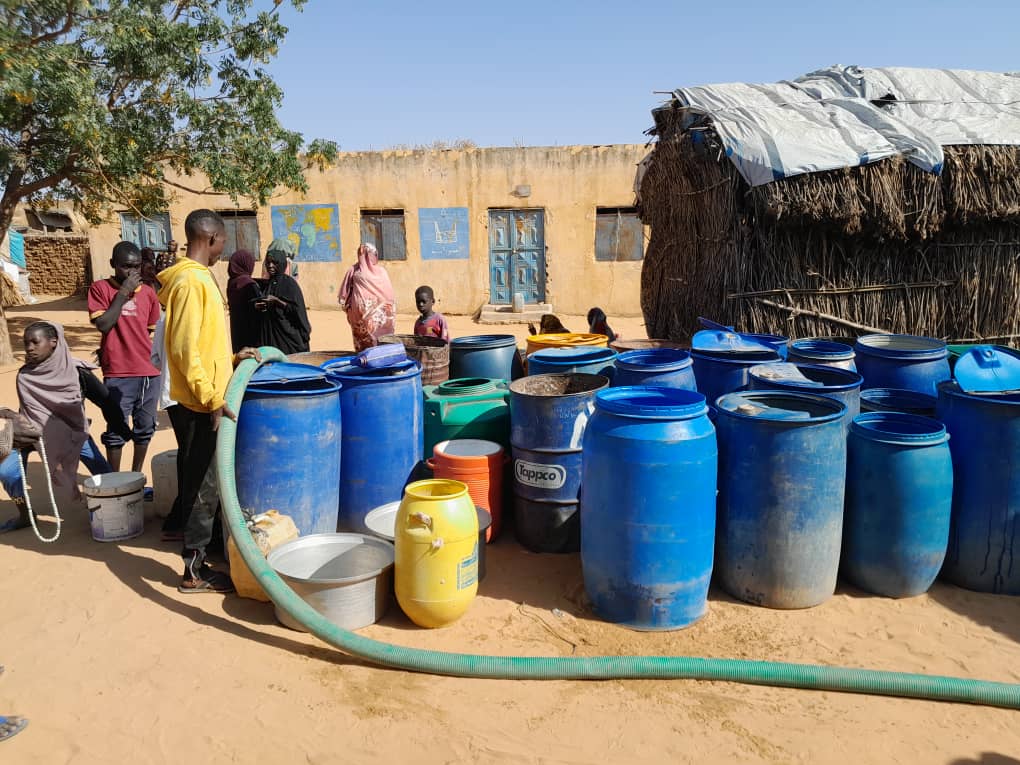
AHA Sudan, in partnership with the Sudanese NGO National Planning Organization (NPO) and with financial support from the Conrad N. Hilton Foundation, is currently working on two projects: the first, a WASH services project implemented by AHA; and the second, a cash-for-food assistance program implemented by NPO.
In addition, in partnership with UNHCR, AHA is assisting IDPs with NFI/Shelter materials distribution as well as providing multipurpose cash assistance to 432 most vulnerable IDP HHs affected by the fighting and displaced to El Fasher IDP gathering centers. The objective of these projects is to lessen the hardships of IDPs by providing access to food, clean water and NFI/Shelter materials for those affected by crises in the Zamzam IDP camp and the El Fasher IDP gathering areas in North Darfur State.
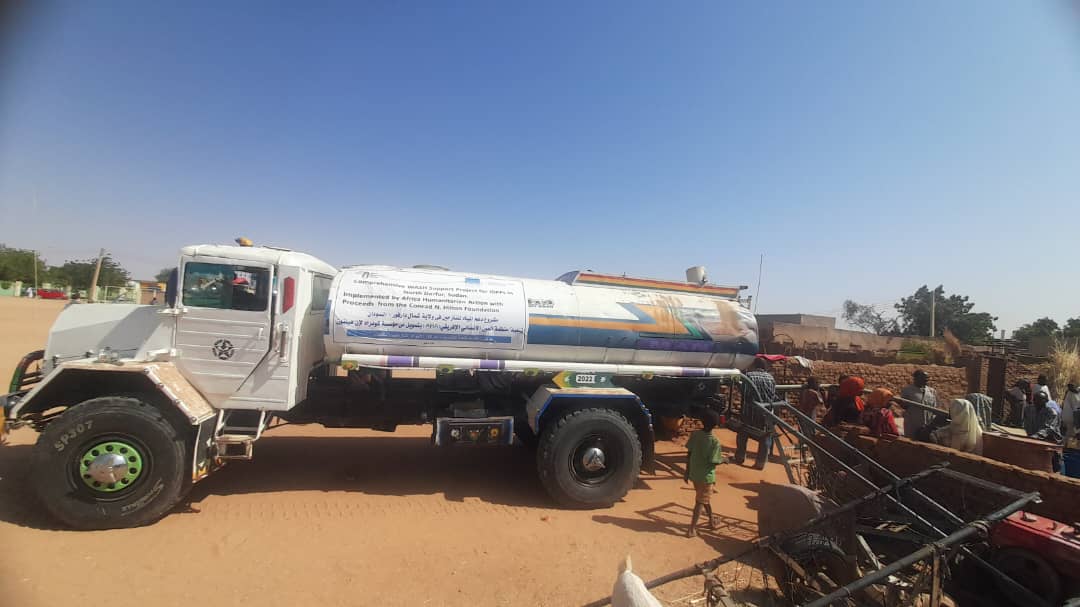
The aim of the WASH services project is to develop water sources and provide water trucking services to meet the urgent need for clean water. Every day, a total of 48,000 liters—equivalent to four water trucks, each with a 12,000-liter capacity—of safe drinking water is supplied to 60,000 individuals residing in 16 IDP settlement centers located in the Zamzam and El Fasher IDP gathering areas. AHA collaborated with community leaders and all other relevant stakeholders to conduct an assessment to determine the number of persons in need of potable water.
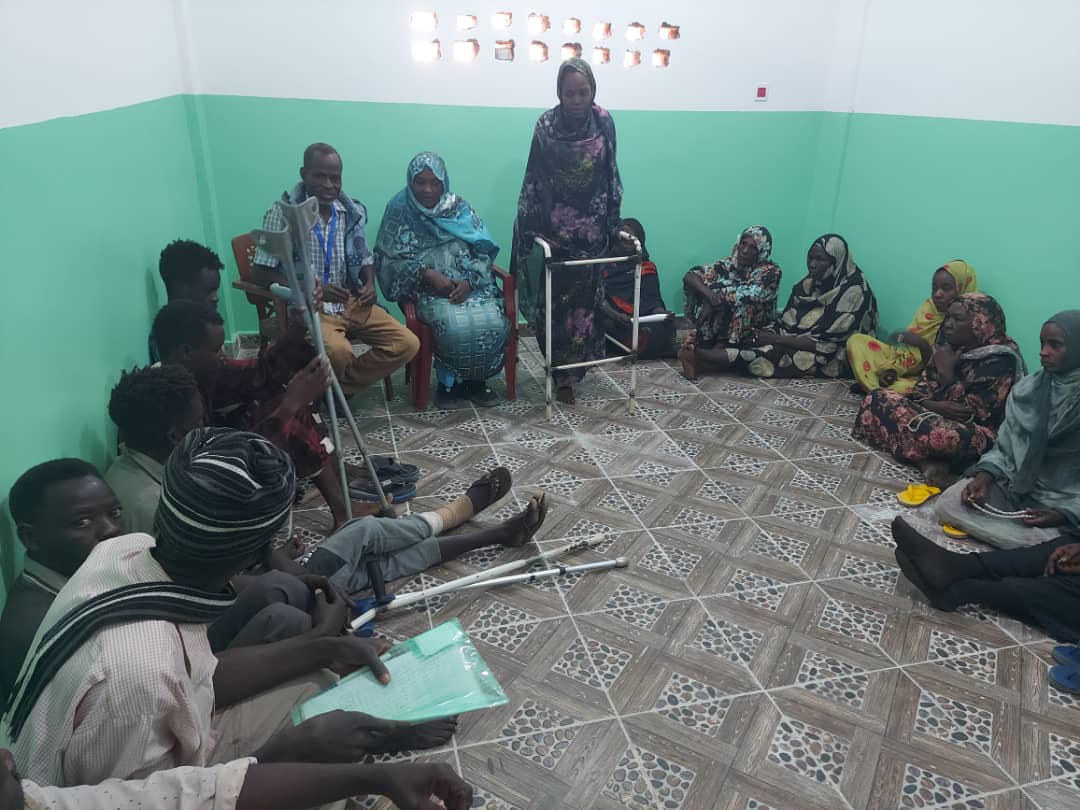
The cash-for-food assistance program aims to provide monthly financial support to 200 of the most vulnerable IDP households in the Zamzam IDP Camp and the El Fasher IDP gathering centers. This support improves food access by increasing purchasing power and offering families more flexible options to meet their basic needs. The joint emergency management committee has established specific eligibility criteria for assistance, including monthly income, the presence of vulnerable groups—such as children under five, pregnant or lactating mothers, the elderly, and individuals with disabilities—and evidence of food shortages within households. These households were identified, registered, and verified based on established vulnerability criteria by a committee comprised of representatives from AHA and NPO.
From addressing urgent needs such as access to clean water and food, to supporting displaced families in rebuilding their lives, every effort we make to improve the dire circumstances faced by the most vulnerable communities reinforces our commitment. The remarkable resilience of those we serve continues to inspire us to strive for meaningful change.
Despite our efforts to alleviate the suffering of those affected by this crisis, we are constantly limited with funds and support to expand our reach. We call our stakeholders and partners to support our mission to restore hope and bring the much-needed critical resources to the communities in Sudan.